

 See My Latest Article on HelloNation
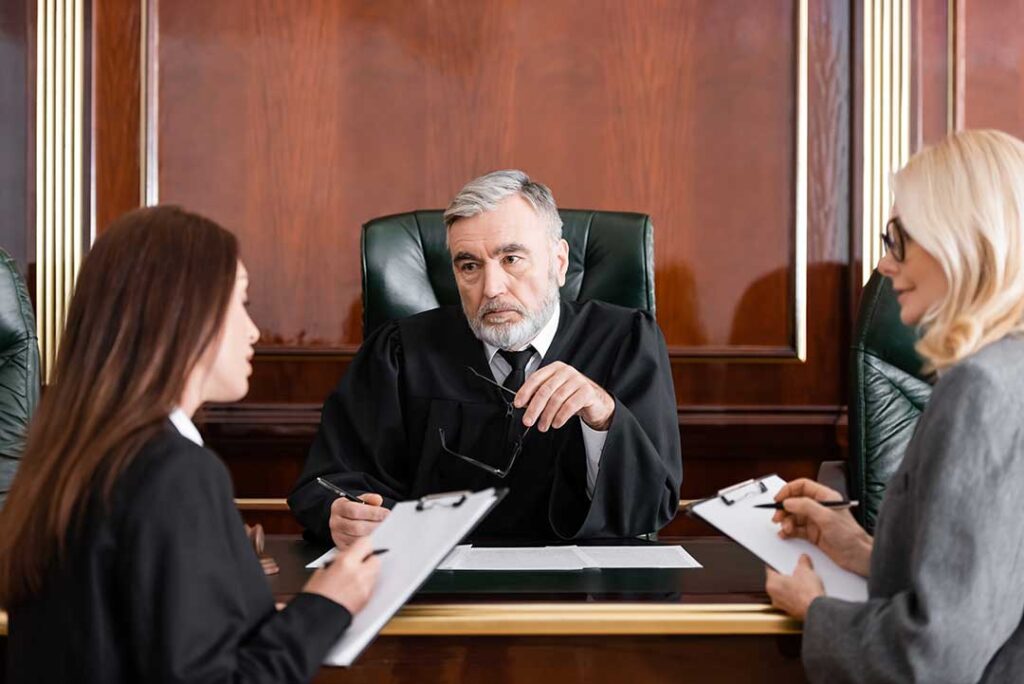
Evidence often determines whether a criminal charge can be proved, limited, or dismissed. In Minneapolis, MN, criminal courts examine not only what evidence exists, but also whether it is reliable, legally obtained, relevant to the charged offense, and presented in a way the rules allow.
For a person accused of a crime, understanding evidence can make the court process less confusing. It also helps explain why an apparently strong piece of evidence may not be usable at trial—and why the absence of evidence can matter as much as evidence that is presented.
What must the prosecution prove?
The prosecution must prove every required element of the charged offense beyond a reasonable doubt. The accused does not have to prove innocence or present evidence.
Each criminal charge has specific elements. Depending on the offense, the prosecution may need to establish facts involving identity, intent, possession, injury, property ownership, location, timing, or the value of property. Evidence matters because it connects—or fails to connect—the accused to each required element.
For example, a recording may show that an event occurred, but it may not establish who committed it. A witness may identify a person, but the reliability of that identification may be disputed. A physical object may be connected to a case, but the prosecution may still need to prove who possessed it and when.
The court or jury considers the evidence as a whole. A single item rarely decides every issue by itself.
What kinds of evidence are used in criminal cases?
Criminal cases may involve testimony, documents, physical objects, photographs, recordings, electronic data, and expert opinions.
Common examples include:
- Witness testimony from alleged victims, bystanders, officers, medical personnel, or other people with relevant knowledge
- Police reports, body-camera footage, dispatch recordings, photographs, and diagrams
- Text messages, emails, social media posts, phone records, location data, or surveillance video
- DNA, fingerprints, blood-alcohol testing, controlled substances, weapons, or damaged property
- Medical records, financial records, employment records, or other documents
- Expert testimony concerning medical findings, forensic testing, digital evidence, or accident reconstruction
Evidence may be direct or circumstantial. Direct evidence comes from someone who personally saw, heard, or experienced a fact. Circumstantial evidence requires the fact-finder to draw a reasonable inference from other proven facts.
Neither form is automatically stronger. A clear video may be powerful, but it can still require interpretation. Circumstantial evidence may be persuasive when several independent facts point in the same direction.
When can evidence be excluded?
Relevant evidence is not automatically admissible. Minnesota courts apply rules governing relevance, reliability, fairness, and the way evidence was obtained.
Evidence may be excluded when:
- It does not help prove or disprove a fact that matters to the charge
- Its value is substantially outweighed by the risk of unfair prejudice, confusion, or misleading the jury
- It is hearsay without an applicable exception
- It lacks a reliable connection to the case
- It was obtained through an unlawful search, seizure, interrogation, or identification procedure
- The prosecution did not provide required notice or disclosure
- The item cannot be authenticated as what the offering party claims it is
A defense may challenge evidence before trial through motions. For example, a motion to suppress may argue that police obtained physical evidence, statements, or electronic information in violation of constitutional protections. If the motion succeeds, the evidence may be excluded from trial even if it appears relevant.
Exclusion is not automatic. The court generally examines the specific facts, including what officers knew, what they did, what consent was given, and whether a warrant or recognized exception applied.
Why does the chain of custody matter?
The chain of custody documents how physical evidence was collected, stored, transferred, tested, and presented. It helps show that the item offered in court is the same item connected to the investigation.
Breaks or inconsistencies in that chain may raise questions about contamination, substitution, alteration, or inaccurate labeling. A minor paperwork mistake does not necessarily make evidence inadmissible, but significant gaps can affect whether the evidence is admitted and how much weight it deserves.
This issue can arise with substances, biological samples, weapons, clothing, damaged property, and electronic devices. The defense may examine who handled the evidence, when it was sealed, whether storage conditions were appropriate, and whether testing procedures were properly followed.
How are statements and hearsay treated?
Hearsay generally involves an out-of-court statement offered to prove that the statement is true. Minnesota’s evidence rules generally exclude hearsay unless a recognized exception or other rule permits its use.
A statement is not necessarily hearsay simply because it was made outside court. Its purpose matters. For example, a statement may be offered to show that the listener received notice or to explain why an officer took a particular action, rather than to prove the statement’s truth.
Statements made by the accused, witness identifications, emergency calls, medical statements, business records, and statements made during or immediately after an event may involve different rules and exceptions. The right to question witnesses can also become significant when the prosecution seeks to use statements made by someone who does not testify.
What is the role of digital evidence?
Digital evidence can be useful but complicated. A screenshot, text message, or social media post may need authentication showing who created it, when it was created, and whether it was altered.
Questions may include:
- Who owned or controlled the account or device?
- Was the message complete or taken out of context?
- Could another person access the account?
- Do system records confirm the date and time?
- Was the information obtained lawfully?
- Does the evidence show the entire conversation rather than selected excerpts?
Phone location records and surveillance footage can also have limitations. Location data may identify a general area rather than a precise person or action. Video may omit events before or after the recorded portion. Weather, lighting, camera angle, and seasonal conditions can affect what a recording shows, particularly in outdoor areas with snow, darkness, or changing visibility.
How can evidence support a defense?
Defense evidence may challenge identity, intent, timing, possession, credibility, or the reliability of an investigation. It may also provide an alternative explanation for events.
Examples include an alibi, messages showing a different timeline, records demonstrating a person’s location, photographs that contradict an allegation, witnesses who observed relevant events, or expert analysis identifying weaknesses in testing or interpretation.
The defense is not required to present evidence in every case. Sometimes the central argument is that the prosecution’s evidence is incomplete, inconsistent, legally inadmissible, or insufficient to meet the burden of proof.
A person accused of a crime generally has the right to remain silent. Speaking with investigators, posting about a case, deleting messages, or asking others to change their accounts can create additional evidence or legal problems. Preserving potentially relevant records and avoiding unnecessary discussion of the case can help prevent confusion about what happened.
What should residents understand about evidence before court?
Evidence is more than a stack of documents or a dramatic courtroom exhibit. Its value depends on whether it proves a required fact, comes from a reliable source, survives legal challenges, and makes sense in the full context of the case.
For local residents facing a criminal accusation, important practical questions include:
- What exactly must be proven for each charge?
- Which evidence supports each element?
- Was the evidence lawfully obtained?
- Can the source be cross-examined?
- Is the evidence complete and authentic?
- Are there inconsistencies between witnesses, reports, recordings, and physical evidence?
- Does the evidence leave a reasonable doubt?
Because evidence rules can affect constitutional rights, pretrial motions, trial strategy, and sentencing consequences, case-specific guidance may be necessary. The general principle remains constant: the prosecution must prove the charge beyond a reasonable doubt using evidence the court permits the fact-finder to consider.